A hot tub is one of those purchases that blurs the line between luxury and practical wellness. It eases cranky backs, turns weeknights into mini vacations, and attracts teenagers who suddenly want to hang out at home. The sticker shock can be real, though. Good units often start around the price of a used compact car, and that’s before delivery, electrical work, and extras. If you’re staring at a “hot tub for sale” sign and wondering how people make the numbers work without draining their savings, you’re not alone. Financing fills that gap, but not all financing is created equal.
What follows is the playbook I wish more buyers had before they sit down with a salesperson or click Apply on a prequalified offer. I’ll cover how the common financing paths work, where the traps hide, and how to match a payment plan to real life, not just a brochure.
What “price” really means
The price tag on a spa is the entry fee, not the total. A competent quote breaks out the parts you’ll pay now versus what you can roll into financing. Expect these components to show up:
- The shell and equipment package, typically 4,000 to 15,000 dollars for mainstream brands, and 15,000 to 25,000 dollars for premium builds with high-efficiency insulation, stronger pumps, and better warranty support.
Delivery and setup can range from a few hundred dollars for curbside drop-off to 800 to 1,500 dollars for backyard placement with a crane or tight-access crew. If your yard slopes or the gate is narrow, budget more.
Electrical work is the wild card. A 240V dedicated circuit with GFCI generally runs 800 to 2,500 dollars depending on distance, panel capacity, and trenching. If your main panel is full, a subpanel or service upgrade adds another layer.
Accessories and start-up essentials creep into the bill quickly. Steps, cover lifter, handrail, upgraded filters, and an ozone or UV system can add 300 to 1,200 dollars. Water care kits run 50 to 200 dollars initially.
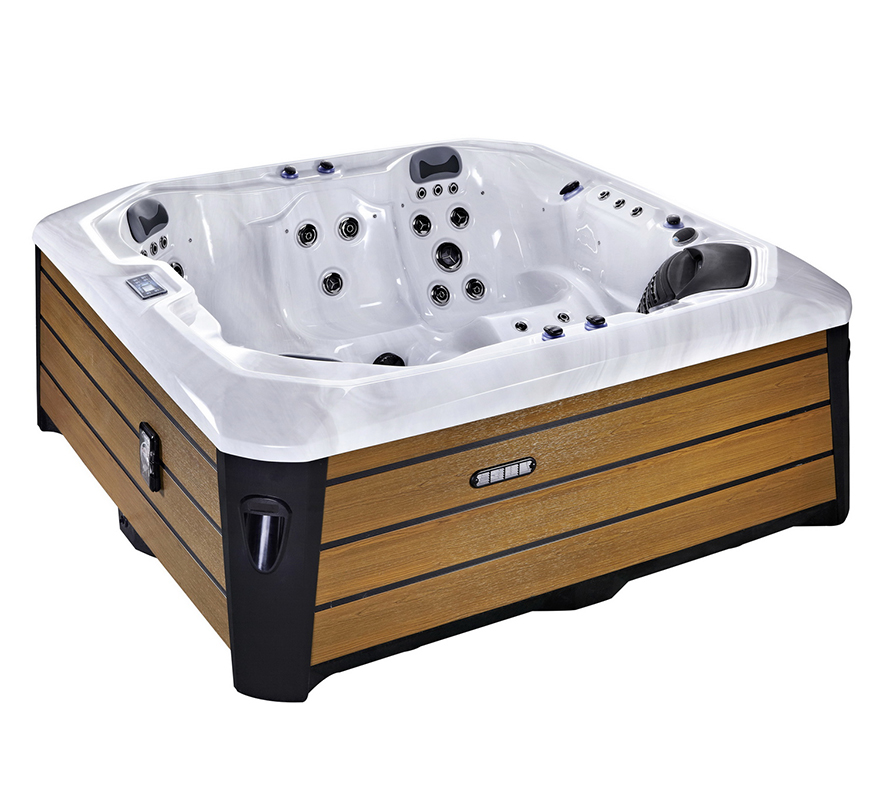
Ongoing costs matter, too. Electricity for a well-insulated unit in a temperate climate might be 20 to 40 dollars per month, climbing in colder regions. Filters every 1 to 2 years, chemicals each quarter, and a replacement cover every 4 to 6 years keep the ownership math honest.
When someone advertises a hot tub for sale at an eye-catching number, ask what’s included. A transparent dealer will break it down so you can decide what to buy now and what to finance.
The big financing families
Financing a spa looks a lot like financing a mid-priced appliance, except the terms can be longer and the fees sneakier. Most buyers land in one of five buckets, each with its own rhythm and risk.
0 percent promotional financing through the dealer
Manufacturers and dealers often partner with finance companies to offer 6 to 36 months at 0 percent APR. The appeal is obvious. If you can swing the payment and avoid interest entirely, it’s the cheapest money you’ll get without borrowing from your cousin.
The catch is the structure. Some promos are true 0 percent with no retroactive interest. Others are deferred interest plans. If you miss the payoff deadline by a day, interest at 20 to 30 percent APR can be charged back to the original purchase date. I have seen people lose a year’s worth of savings over a 72-hour payment delay.
What to check: Is it same-as-cash or truly zero interest? Are there minimum payment requirements beyond the obvious? Any origination or dealer fees? Will the lender perform a hard inquiry on your credit report? And what happens if a scheduled payment falls on a holiday?
This plan works best for buyers who can divide the purchase by the promo months and comfortably auto-pay the result. For a 10,000 dollar tub with 24 months at 0 percent, think roughly 420 to 450 dollars per month once you add taxes and a few accessories. If that number pinches, look at longer terms rather than gambling on a deferred-interest clock.
Longer-term consumer installment loans
Once you move beyond two years, the rates climb and the exposure to interest grows. Dealers can arrange 36 to 120 month loans through third-party lenders. APRs vary with credit profile and market rates, but a realistic range today is 8 to 18 percent. The payment drops, which helps cash flow, but the total interest can surprise you.
For example, an 11,000 dollar financed amount at 12 percent over 84 months yields a payment around the size of a typical smartphone family plan, but the total interest over the life might exceed 3,000 dollars. If you plan to keep the tub for a decade and care about monthly stability more than minimizing interest, this can be perfectly rational. Just schedule small principal prepayments when you can. Even an extra 20 or 50 dollars per month shortens the tail and trims hundreds of dollars off the total cost.
Ask the lender about prepayment penalties. Most consumer installment loans for spas are simple interest with no penalty, but verify. Also ask whether they charge a dealer discount fee that’s embedded in your final price. A dealer might be eating two to eight percent to offer a promotional APR and recouping it in other line items. Knowing that helps your negotiating posture.
Personal loans from your bank or credit union
If you have a relationship with a credit union, start there. They often beat dealer-arranged rates for qualified borrowers and are less likely to add obscure fees. Funding is quick, underwriting is straightforward, and pre-approval gives you leverage when talking price on the showroom floor.
Personal loans typically have fixed rates and terms ranging from 24 to 84 months. If you’re sitting on a 760-plus credit score, you might see APRs in the single digits. Mid-600s borrowers can still get funded but will pay more. The upside is clean documentation, reliable servicing, and clear prepayment terms. The downside is that the maximum you can borrow might be lower than the full cost with delivery and electrical, which means some cash out of pocket.
When comparing to a dealer promo, use total cost across the exact same time horizon, not just the monthly payment. A 0 percent for 24 months that strains your budget can be more expensive if it leads to late fees or a missed deadline. A credit union loan at 9 percent for 48 months might end up gentler both financially and emotionally.
Home equity strategies, including HELOCs
Homeowners with available equity sometimes treat a spa like any other home improvement. A HELOC or home equity loan usually offers lower interest versus unsecured loans. The payments can be interest-only for a period, and the line can cover electrical upgrades and a nice pad without juggling multiple lenders.
The trade-off is risk. You’re tying a depreciating leisure asset to your house. Miss payments, and the consequences are more serious. Closing costs may apply. And while interest can be lower, rate volatility on a HELOC can bump your payment during the draw period. I tend to view equity-backed financing as a fit for buyers already planning multiple improvements, who want one flexible pool of funds and have rock-solid cash flow.
If you choose this route, shop the line like a mortgage. Look for margin over prime, lifetime caps, draw period length, annual fees, and early termination fees. Also, coordinate with your electrician so your permit and inspection paperwork align with the lender’s documentation requirements in case they request proof of use.
Credit cards and buy-now-pay-later
I don’t recommend revolving a hot tub on a standard credit card. The 18 to 29 percent APR kills the value proposition quickly, and most rewards won’t offset the interest. That said, a long 0 percent introductory APR card can be useful as a bridge if you have a clear payoff plan and iron discipline. The trick is to track the clock and avoid new charges that dilute your payoff.
Point-of-sale BNPL options pop up for accessories and smaller add-ons. They can make sense for a 400 dollar cover lifter or a 600 dollar step package, less so for the entire spa. Read the late fee policy, and disable autopay from an account that sometimes runs lean. One missed micro-payment can erase the convenience.
How dealers structure offers
Walk into a showroom and you’ll see a “hot tub for sale” tag along with glossy cards touting easy payments. Behind those placards are dealer decisions about rate buydowns, financing partners, and margin strategy. Understanding that gives you room to negotiate.
If a dealer offers 9.99 percent for 60 months through Lender A and 0 percent for 24 months through Lender B, they might be subsidizing the 0 percent. Ask for the cash price versus financed price. Sometimes the “sale” price assumes a certain lender. If you prefer to use your own bank, the dealer could add back a discount fee they would have paid otherwise. It’s fair to ask them to split the difference or toss in delivery or a cover lifter.
Timing matters. Manufacturers run quarterly incentives to move inventory before new models arrive. If the store has three floor units they need gone, you can sometimes pair a cash discount with a reasonable APR loan from your credit union and come out ahead of the splashy promo package.
I’ve also seen small independents offer honest financing but cut corners on delivery or startup support. A rock-bottom price is nice until the tub arrives with a cracked cabinet panel and the crew shrugs. The value of a dealer shows up after the check clears. If they have an in-house service team, employ licensed electricians for basic installs, and stock filters and covers, that’s worth some premium.
What good financing looks like in the wild
A few real-world scenarios, stripped of brand names but true to life:
Case 1, the fast payoff: A couple buys a mid-range, 7-seat spa at 10,500 dollars, plus 1,200 for electrical and 500 for delivery and accessories. They use a 24-month 0 percent promo for the tub and pay the other costs in cash. Payment lands just under 440 dollars per month. They set an automatic payment two days after payday and a calendar reminder for three months before the promo ends. The tub is free of financing in two years, total interest paid is zero, and they never felt squeezed.
Case 2, the long glide: A family replaces a 20-year-old unit that leaks. They choose a premium, energy-efficient model for 16,000 dollars because their winters are brutal and electricity isn’t cheap. They finance 14,000 dollars over 84 months at 10.5 percent via a credit union, pay 3,000 dollars in cash for delivery and electrical, and add 50 dollars to each monthly payment toward principal. The payment fits their budget, the efficiency saves 15 to 25 dollars per month in winter versus their old unit, and the extra principal trims almost a year off the term.
Case 3, the equity bundle: A homeowner plans a deck, new spa pad, and a 240V line. They open a HELOC at prime plus 0.25 percent, draw 25,000 dollars, and complete all work at once to avoid re-trenching later. Payments are manageable, and they plan to refinance or pay down aggressively within three years. It only works because their income is stable, they have emergency savings, and they’re comfortable tying the project to the house.
Case 4, the cautionary tale: A buyer takes a deferred-interest 18-month plan for an 8,000 dollar spa. Swim and Spas Twelve months in, they miss a minimum payment after switching banks. The penalty triggers retroactive interest at 26.99 percent on the entire purchase amount, ballooning the remaining balance by over a thousand dollars. The tub still brings joy, but the financing headache sours the experience. A simple autopay and a calendar review would have prevented it.
Understanding the payment math
Two numbers control your monthly payment more than anything else, even more than the interest rate: the term and the financed amount. The fastest way to tame the payment without wrecking the total cost is to reduce the amount you finance. A small down payment matters. Put 2,000 dollars down on a 12,000 dollar purchase, and your monthly number drops across every term you consider. Then add small principal prepayments. Lenders apply them directly, and over time they chew through future interest.
Use rough rules of thumb when shopping:
- Every 1,000 dollars financed at 10 percent APR for 60 months costs about 21 dollars per month. For 84 months, it’s closer to 15 dollars.
That means an 11,000 dollar financed amount might be around 230 dollars per month at 60 months and 165 dollars at 84 months, before taxes and any add-ons. These are ballpark figures, but they keep you grounded when a salesperson tosses out a number that feels magically low.
If you can’t see the amortization schedule, ask for it. Look at the first and last payment breakdowns. If the loan front-loads interest heavily, that’s normal for simple interest amortization, but it underscores why early extra payments are powerful.
Credit score, approvals, and how to put your best foot forward
Hot tub lenders are accustomed to a range of credit profiles. A FICO score above 720 opens the best offers. 660 to 719 is the middle lane, where approvals are common with modestly higher APRs. Below 660, approvals still happen, particularly with larger down payments, but the rates can make a long-term loan unappealing.
Improve your odds by cleaning up small balances on revolving accounts a month before you apply. Utilization drives a big chunk of your score. If you’re close to a credit tier bump, waiting 30 days can pay off.
Prepare proof of income and residence, and make sure your driver’s license matches your address. If a lender offers prequalification with only a soft pull, take it, then compare the real offer after the hard inquiry to ensure nothing shifted. Avoid applying with five lenders in the same week unless you’re sure they count as a single shopping window. Auto and mortgage scoring models do that; general consumer loans are less forgiving.
Smart ways to trim the financed amount
There are cleaner ways to reduce how much you borrow than downgrading to a flimsy shell that leaks heat. The best savings hide in logistics and extras.
Delivery complexity drives cost. If you can clear a path and avoid a crane, you might save 300 to 800 dollars. Trim shrubs, remove a section of fence, and aim for a straight-line access route. Send your dealer photos and measurements ahead of time so they can schedule the right equipment once, not twice.
Electrical planning saves future headache. Place the spa close enough to the main panel to shorten conduit runs, but not so close that maintenance access is cramped. In many jurisdictions, you need 5 feet of clearance from the house for certain window types and 6 feet for overhead lines. A thoughtful location reduces trenching and avoids rework after inspection.
Skip impulse accessories. You can add a fancy step or a handrail later. Buy the cover lifter if your back will need it, but make it the simple model, not the premium motorized one. Put the difference toward a better insulation package inside the shell, which pays you back every month.
Ask about refurbished or prior-year floor models. A showroom tub that has been wet-tested but not abused can shave 10 to 20 percent off the price. Get the warranty in writing just as you would for a new unit, and confirm the cabinet hasn’t been drilled for a particular cover lifter you don’t want.
Warranty and service as part of the financial equation
The cheapest interest rate in the world won’t save you from a bad spa. Warranty terms vary wildly. A five-year comprehensive warranty with full labor coverage is worth more than a ten-year shell-only plan that leaves you paying for everything else. A service call can run 150 to 250 dollars just to roll the truck, plus parts and labor. If your dealer supports the product with trained techs and stocks common parts, your downtime is shorter and your out-of-pocket costs are controlled.
Budget for a good cover and replace it when it gets waterlogged. A heavy, sagging cover leaks heat and turns your electric bill into a scolding. Plan on 400 to 800 dollars every 4 to 6 years. If you financed the tub, don’t finance the replacement cover. Set aside a small monthly amount so you can pay cash.
Insurance, permits, and the details that derail installs
Many cities require permits for the electrical work. Your electrician often pulls the permit and schedules inspection. Coordinate this with delivery dates so your spa doesn’t sit idle in the yard for two weeks. Inspections usually focus on GFCI placement, bonding, and clearances around the tub. Failures send you back to the calendar.
Home insurance rarely requires a rider for a portable spa, but confirm with your agent, especially if you’re installing a unit partially sunk into a deck. Fences, self-latching gates, and cover locks aren’t just good practice. They can be conditions of coverage.
If your backyard floods in heavy rain, build a proper pad with drainage before the spa arrives. Water and base movement shorten equipment life, and most warranties exclude flood damage. A simple gravel bed with concrete pavers on compacted soil, done right, outperforms a hasty slab that tilts after the first freeze-thaw cycle.
Negotiation without drama
A respectful negotiation goes farther than theatrics. Bring a pre-approval from your bank or credit union. Ask the dealer if they can match the rate or beat the total cost with their promo. If they can’t, request value where it matters: upgraded insulation, a better cover, a year of filters, or a service credit.
Frame your request around your constraints. You want a payment under a certain number and a reliable unit with local service. Dealers who hear that will guide you to models that won’t generate after-sale headaches for either of you. It’s perfectly reasonable to ask for the out-the-door financed amount, broken down by tax, delivery, electrical allowance if any, and lender fees. The more daylight on the numbers, the fewer surprises later.
A quick decision framework
When you’re sorting through options, a short checklist keeps you from getting swept away by polished acrylic and waterfall lights.
- Can you comfortably make the payment without counting on a raise or a bonus? If not, stretch the term or lower the financed amount. Is the interest truly zero, or deferred with a retroactive trap? If deferred, set two reminders and pay it off a month early. Does the dealer have in-house service, and what does the warranty cover in the first two years? Parts and labor, or parts only? Are the delivery and electrical quotes anchored to your actual site conditions? Send photos, get it in writing. What’s your plan for water care, filters, and a cover replacement fund? Small monthly set-asides beat lumpy expenses.
Matching tub and financing to your lifestyle
A spa is half numbers, half habit. If you use it four nights a week, the amortized cost per soak can beat dinner takeout. If it turns into an expensive birdbath, every payment stings. Be honest about how you live. If you travel a lot or forget maintenance tasks, choose a unit with sanitization aids like ozone or UV and a dealer who offers water care support. Simpler ownership translates into consistent use, which makes every financing dollar feel smarter.
Think about hosting. If teenagers and neighbors will pile in on weekends, pick a model with decent footwell space rather than just a high seat count. Cramped tubs lead to shortened soaks. If it’s a recovery tool after runs or workouts, look for jets that actually hit calves and lower back, not just a dozen small ports that make froth but no pressure. Spending an extra 1,000 dollars on a model that fits your uses can save you from trading up later, which is the most expensive option of all.
Final thoughts that actually help
If you’re staring at a hot tub for sale and trying to make clean sense of the numbers, anchor yourself to three truths. First, price transparency beats payment theater. Get the out-the-door total and compare it across the same term and rate where possible. Second, lender structure matters as much as the APR. A 0 percent that punishes a single late payment can be worse than a modest fixed rate with forgiving terms. Third, the dealer relationship has a cash value. The team that answers the phone a year later and shows up with the right part on the truck is the difference between a luxury that relaxes you and a hobby that nags you.
Choose a financing path that respects your monthly budget and future self. Set autopay, add a nudge of extra principal, and give the installation the care it deserves. Then do the most important part: use the thing. The finest spreadsheet on earth can’t measure the feeling of stepping into warm water after a long day and letting your shoulders drop two inches. That’s the real return.